

Ujjain, a city nestled in the heart of Madhya Pradesh, evokes a sense of devotion and spirituality the moment its name is uttered. The most prominent pillar of this city’s identity is the Mahakaleshwar Jyotirlinga Temple. Mahakaleshwar, meaning ‘the great lord of time’ or ‘the conqueror of death’, is worshipped as the eleventh of the twelve Jyotirlingas of Lord Shiva. This temple is not just one of India’s major pilgrimage sites but also boasts a history as profound and ancient as time itself.
The Ancient Bond Between Ujjain and Mahakaleshwar
In ancient times, Ujjain was known as Ujjayini or Avantika. It was a city where culture, education, and spirituality converged. Situated on the banks of the Kshipra River, this city has held religious and historical significance for centuries. There are several legends and anecdotes surrounding the establishment of the Mahakaleshwar Jyotirlinga.
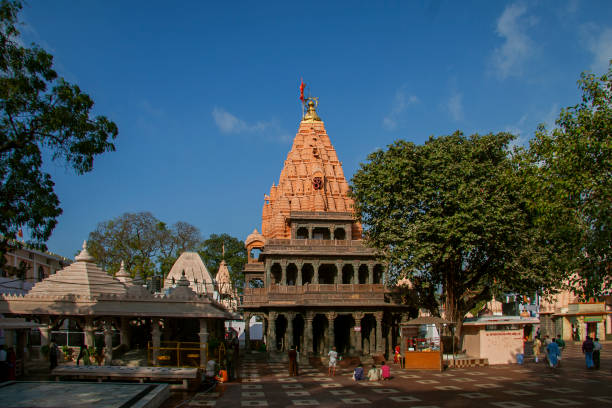
According to one ancient legend, at one time, a devout king named Chandrasen ruled Ujjayini. He was a great devotee of Lord Shiva. Once, when enemies attacked Ujjayini, the king and the people of the city prayed to Lord Shiva for help. Pleased by their prayers, Lord Shiva manifested as Mahakal and annihilated the enemies. He then decided to reside at that very spot, and since then, this place became famous as the Mahakaleshwar Jyotirlinga.
Another narrative suggests that Lord Brahma performed a yagna (sacrificial ritual), and from that yagna, Mahakal originated. It’s also believed that Mahakaleshwar is the place where Lord Shiva vanquished the demon Andhakasur.
Besides these legends, Mahakaleshwar is also mentioned in Puranas and religious scriptures like the Skanda Purana, Mahakal Samhita, and Shiv Purana. These texts provide detailed descriptions of the temple and its significance, affirming that Mahakaleshwar‘s history spans centuries and it has been an extremely sacred place for Hinduism.
Construction and Reconstruction: A Centuries-Long Saga
The history of the Mahakaleshwar Temple has been marked by numerous ups and downs. Many rulers contributed to its construction and reconstruction over time.
Early Mentions and Ancient Roots
Evidence of the Mahakaleshwar temple‘s existence can be traced back to the Maurya and Gupta periods. Ujjain was a major center of knowledge and art during the Gupta Dynasty (roughly 4th to 6th century CE). It’s highly probable that the temple held significant importance even during these early periods.
A Period of Destruction: The 13th Century
Foreign invasions on India significantly impacted the Mahakaleshwar temple.
- In 1234-35 AD, Iltutmish of the Delhi Sultanate attacked Ujjain.
- He subsequently destroyed the Mahakaleshwar temple.
- The idols were broken, and the temple’s wealth was plundered.
This marked a dark chapter for Ujjain, and the temple lay in ruins for several centuries.
The Maratha Revival and Rebirth
A new era for Ujjain and the Mahakaleshwar temple began when the Maratha rulers established their dominion over Malwa.
- In the 18th century, during the time of Peshwa Baji Rao I, the Maratha general Ranoji Shinde undertook the reconstruction of the Mahakaleshwar temple.
- He commenced the construction of the temple’s current structure in 1736 AD.
This temple stands as an excellent example of Maratha architecture from that era. This reconstruction restored the lost glory of the Mahakaleshwar temple, making it a focal point for devotees once again.
Contributions from the Holkar and Scindia Dynasties
Following Ranoji Shinde, the Holkar and Scindia dynasties also made significant contributions to the temple’s maintenance and development. Rani Ahilyabai Holkar, a great ruler and devout woman, took special interest in the temple’s service and management. She built several dharamsalas (pilgrim inns) and improved the surrounding areas.
Mahakaleshwar Temple’s Architecture and Structure
The Mahakaleshwar Temple in Ujjain showcases a unique blend of Maratha, Bhumija, and Chalukya architectural styles, forming an expansive complex that houses the main deity and several smaller shrines. This diverse design reflects centuries of religious dedication and skilled craftsmanship, resulting in a deeply spiritual space that has evolved through various periods of renovation and expansion.
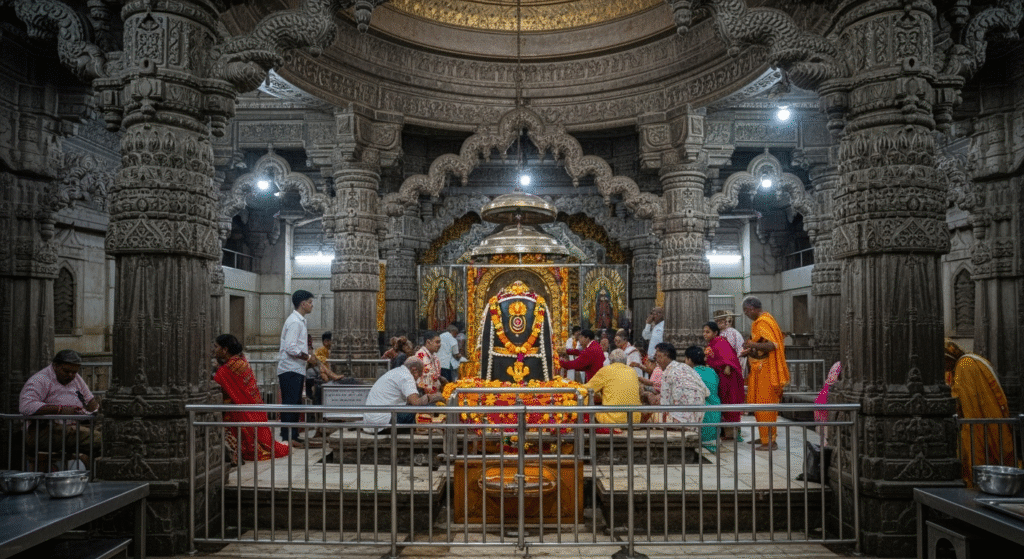
The temple’s most distinctive feature is its three-tiered sanctum sanctorum (garbhagriha). The top floor holds the Nagchandreshwar Maharaj shrine, accessible to devotees only once a year on Nagpanchami. The middle tier is home to Omkareshwar Shiva, symbolizing the universe’s primordial sound. On the ground floor lies the revered Mahakaleshwar Jyotirlinga, unique for its Dakshinamurti (south-facing) posture, a rare and highly significant feature. This sacred core also includes idols of Ganesha, Parvati, and Kartikeya. Within the complex, the ancient Koti Teerth pond is believed to cleanse devotees of their sins, further enhancing the spiritual journey..
Bhasm Aarti: A Divine Experience
The Sacred Bhasm Aarti: A Timeless Ritual
The Bhasm Aarti stands as the Mahakaleshwar Temple’s most distinctive and awe-inspiring ritual. Performed daily in the serene hours of the Brahma Muhurta, typically before dawn, this profound ceremony involves symbolically anointing Lord Mahakal with fresh ashes sourced from a cremation ground. Witnessing this potent aarti is widely regarded as a truly transformative spiritual experience for devotees.
The deep spiritual significance of the Bhasm Aarti lies in its symbolism: Lord Shiva, in his form as Mahakal, embodies ultimate authority over time and mortality. The application of ashes signifies His supreme detachment from worldly illusions and transient existence, highlighting His absolute power. This sacred observance is profoundly believed to illuminate the path towards moksha (spiritual liberation) and mukti (ultimate salvation). Given its immense spiritual allure and the vast number of pilgrims it attracts, advance registration is absolutely essential for those wishing to attend this revered morning rite.
Plan Your Divine Journey with Ujjain Tour and Travel
Ready to immerse yourself in the spiritual magnificence of the Mahakaleshwar Temple and personally experience the captivating Bhasm Aarti? Ujjain Tour and Travel is here to ensure your pilgrimage is both seamless and unforgettable. We specialize in crafting exceptional travel itineraries to Ujjain, allowing you to fully absorb its divine atmosphere without any logistical concerns. From securing comfortable lodging to arranging stress-free temple visits, including vital assistance with Bhasm Aarti registration, our team meticulously handles every detail. Start planning your sacred expedition today by visiting our website: https://ujjaintourandtravel.com/.
The Modern Era of Mahakal’s Development
In recent years, several major projects have been undertaken to further develop the Mahakaleshwar temple complex.
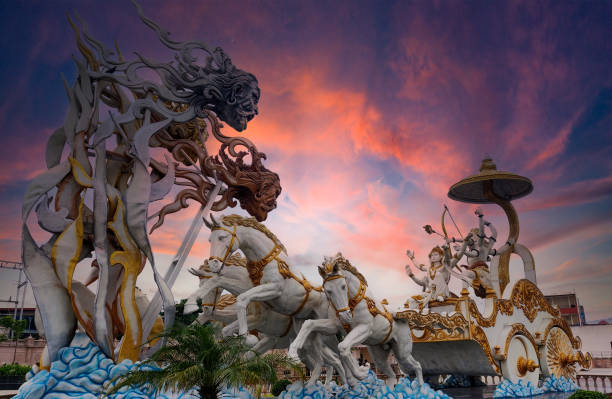
- The “Mahakal Lok” corridor is the most significant among them.
- Its first phase was inaugurated by the prime minister in October 2022.
- This corridor is transforming the area around the temple, featuring statues, murals, and visual representations related to Lord Shiva.
This development provides a better experience for devotees and has further increased the temple’s appeal. These projects not only hold spiritual significance but also boost tourism in Ujjain.
Final Thoughts
The history of Mahakaleshwar Temple Ujjain is not just the story of a temple; it is a tale of centuries of devotion, faith, and revival. It is a place where time itself becomes still, where Lord Shiva listens to His devotees and blesses them. The bond between Ujjain and Mahakaleshwar has existed since ancient times and will continue forever. This temple stands as a living symbol of India’s eternal culture and spirituality, inspiring future generations. May Mahakal’s blessings always be upon us all. Har Har Mahadev!
Ujjain, a city nestled in the heart of Madhya Pradesh, evokes a sense of devotion and spirituality the moment its name is uttered. The most prominent pillar of this city’s identity is the Mahakaleshwar Jyotirlinga Temple. Mahakaleshwar, meaning ‘the great lord of time’ or ‘the conqueror of death’, is worshipped as the eleventh of the twelve Jyotirlingas of Lord Shiva. This temple is not just one of India’s major pilgrimage sites but also boasts a history as profound and ancient as time itself.
📖 Related Guides You’ll Find Useful
- Mahakaleshwar Temple Darshan Guide 2026 — Bhasma Aarti timings, online booking steps, VIP entry and what to expect
- Simhastha Kumbh Mela 2028 — Plan Ahead — 150M pilgrims expected; dates, packages and early booking guide
- Ujjain New Airport 2028 — AAI project update, timeline and how to fly to Ujjain right now
- Nearest Airport to Ujjain — Indore IDR is 55km away; cab booking guide